
Enlarged Prostate
What is an enlarged prostate?
An enlarged prostate is a prostate gland that is larger than normal. This common condition is known as benign prostatic hyperplasia (BPH). BPH is not prostate cancer and does not increase your risk of prostate cancer.
A normal prostate is approximately the size of a walnut and sits underneath the bladder, wrapped around the urethra. The prostate is a gland that plays an important role in sexual function.
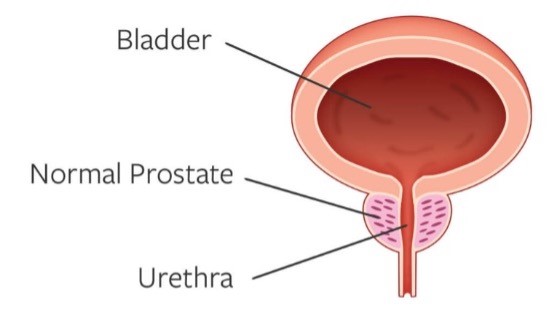
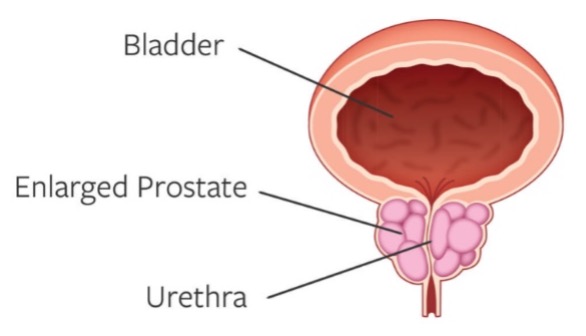
As the prostate grows and becomes larger than normal, it may:
- Constrict the urethra, making it difficult to urinate
- Apply pressure on the bladder, causing it to weaken and have difficulty emptying
If left untreated, BPH can cause significant health problems, including irreversible bladder or kidney damage, bladder stones and incontinence.
Do you have symptoms of BPH?
BPH may cause lower urinary tract symptoms (LUTS), which affect the bladder, prostate and urethra. These symptoms impact your ability to hold urine and empty your bladder.
There are two categories of LUTS symptoms:
Category 1: Ability to hold urine
- Frequency – the need to urinate more often than normal
- Incontinence – complete loss of the ability to hold urine
- Nocturia – the need to urinate frequently at night while sleeping
- Urgency – the need to urinate immediately or urgently
Category 2: Emptying the bladder.
- Dysuria – pain or stinging when urinating
- Hesitancy – difficulty starting to urinate
- Intermittency – a urine stream that starts and stops
- Retention – complete loss of the ability to empty your bladder
- Straining – the need to push or strain to start and complete urinating
- Weak stream – gentle or weak stream instead of a strong stream of urine
Schedule an appointment with one of our providers by calling 435.893.6362 or visiting our Find a Provider tool.